
Ingenuity, with a question worth answering.
How can medicines evidence become useful action? Which cells allow a tumour to return? Where can a manufacturing resource work harder?
Our research connects scientific discovery with decisions that matter to medicine. Different fields. A shared ambition to make the next possibility useful.
In the conversation.
NEUVIOR and our founder’s perspectives have appeared across science, business and technology publications.
















Reporting, commentary, letters and podcast appearances | Read each feature for its format and source.
Medicines intelligence that reaches the next decision.
Healthcare produces evidence, guidance and operational information at a scale that no single professional can hold in view. Turning that information into a useful local decision brings a different challenge: assess relevance, understand the trade-offs and organise the work that follows.
Our Medicines Intelligence research examines that path through PHARMORIS. It connects evidence preparation, professional review, implementation planning and value review. The commercial purpose is to make medicines decisions easier to examine and act on across the organisations involved in care.
Understand what treatment leaves unresolved.
Our biomedical work begins with glioblastoma recurrence: the malignant cells that remain after treatment, what they do over time and whether their contribution to regrowth offers a useful opportunity for intervention.
The programme connects cell identity and treatment history with functional response. It asks which findings would support a selective therapeutic rationale and what a useful next experiment would have to demonstrate. GLIO is one part of NEUVIOR’s wider research landscape, with a distinct scientific purpose and development path.
Discover the industrial value in better resource decisions.
Medicines also rely on energy, materials and reliable manufacturing. Resource Economics examines where a change could improve the use of those resources while meeting the requirements of a useful industrial application.
PHARMORIS-ECO investigates energy intelligence in fixed pharmaceutical chilling and freezing. ZYLON’s completed initial feasibility work provides a materials and recovery research record. Together, they connect scientific performance with the practical economics of adoption.
The conclusion depends on what was compared
This published comparison of replication criteria makes an unfamiliar research decision visible: different definitions can agree without being interchangeable. It is a reason to define the next question before judging progress.
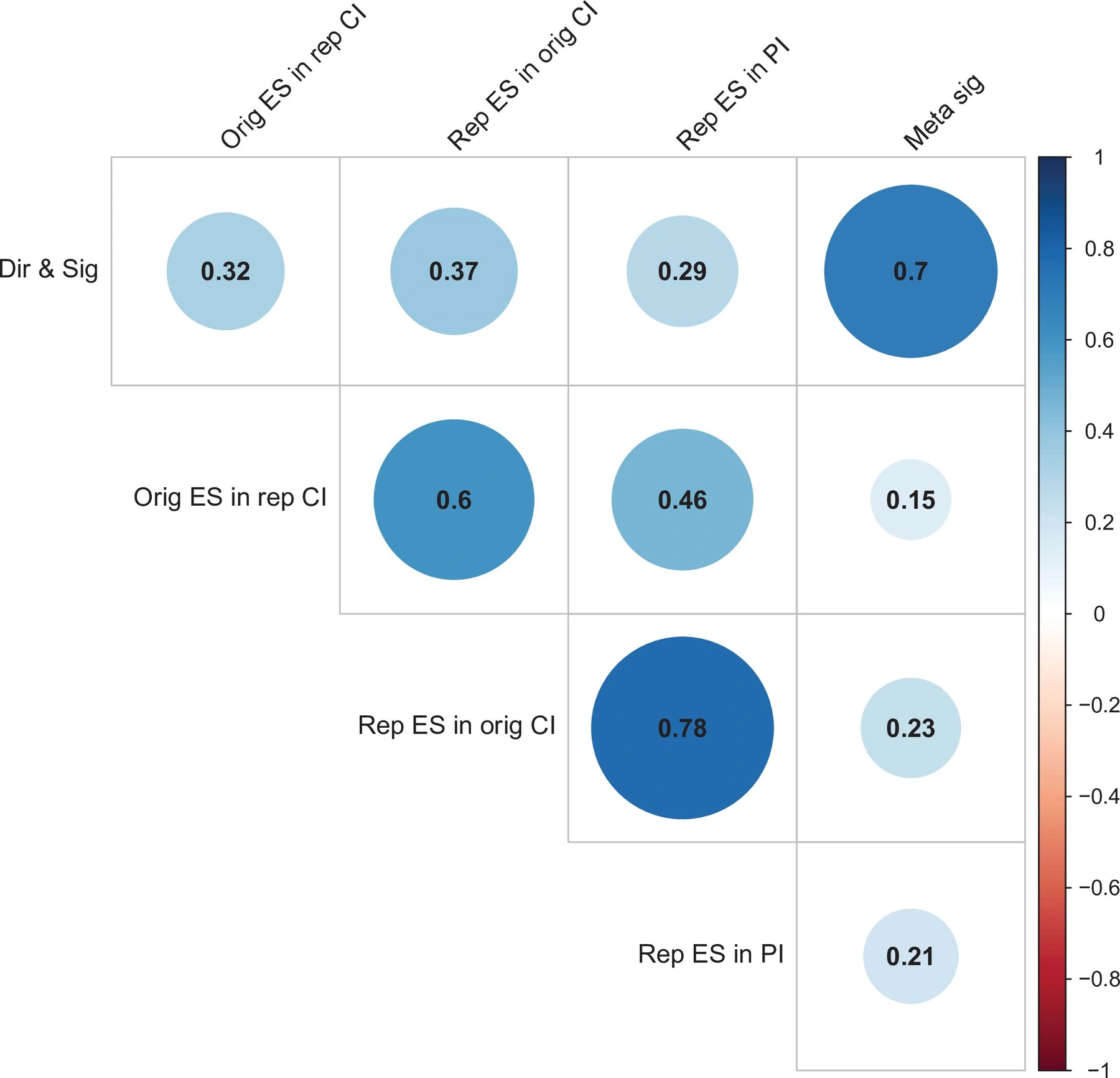
External meta-research: Errington et al. (2021), Figure 7, compares five criteria used to assess replication in selected preclinical cancer experiments. The published correlations describe that project; they do not measure NEUVIOR research quality or predict any programme’s success.
Timothy M Errington, Maya Mathur ... Brian A Nosek · The conclusion depends on what was comparedCC BY 4.0 | Inspect the complete figure
Source and image notes
Faithful proportional viewing copy in WebP; complete original figure and all panels retained. No crop, colour adjustment, relabelling, animation or added data.
Research portfolio | Different routes to a useful answer
What would a revealing answer let someone decide?
A medicines workflow, a tumour-survival mechanism and an industrial resource question need different experiments. Choose a research perspective to see which comparison would make its next decision more defensible. The shared centre is a decision worth informing, rather than a claim that one method or one dataset can answer every programme’s question.
Editorial decision model, not measured NEUVIOR results. Spatial positions indicate relationships, not measured quantities.
A concrete contribution makes the discussion useful.
A professional workflow, an informative biological model or an industrial specification can each make a research question more answerable. The first conversation should establish which uncertainty your expertise could resolve, rather than assume that every programme requires the same collaboration format or facilities.
Describe the question and the capability you could contribute.
Medicines work
For medicines intelligence, a useful comparison concerns the complete professional task. Preparation, checking, coordination and follow-through can change where the burden sits. A technically interesting output therefore needs to be examined alongside competent existing practice in a defined organisational setting.
- Professional task
A real task definition, comparator, professional review and relevant operating conditions.
A useful next stepWhich recurring decision would make an evaluation worthwhile?
Different programmes become easier to assess when their own next decision remains in view.
A good question deserves a revealing comparison.
The next experiment should make a choice clearer. We define what the proposed approach is expected to do, which alternative it must be compared with and what result would change the programme’s direction.
The appropriate evidence depends on the question. Medicines software needs a relevant workflow and professional evaluation. A biological programme needs suitable models and functional outcomes. Industrial resource research needs a defined output, operating conditions and a credible baseline. The discipline is shared; the tests are specific.
An experiment should change the next decision.
Medicines intelligence, biological research and resource questions use different evidence. Each needs a method able to distinguish the important alternatives.
A useful outcome might support the next stage, narrow the question or show why an attractive route should stop. The value lies in what the finding changes, not the appearance of a laboratory.
Make progress understandable.
A useful programme update explains what was examined, what was learned and which decision follows. It should give readers enough substance to understand the work without exposing confidential methods, unpublished results or another organisation’s information.
As outputs become available for release, we intend to connect publications, methods and research updates with the programme they inform. That creates a clearer account of development: a scientific question, an interpretable finding and a justified next step.
NEUVIOR Data Analysis
A source.
A question.
A clearer decision.
Useful intelligence keeps its evidence attached.
Our public analysis connects a defined question with named sources, reporting periods and methods. Each source below shows the work available today and the access still needed.
Published-data analysis, research hypotheses and evidence studies are distinct kinds of work. Their meaning should remain clear as the programme grows.
Open Targets | Quarterly platform releases
Open Targets Platform
Which published associations support a research hypothesis, and through what evidence?
Source identifiedUS National Library of Medicine | Source records updated by responsible parties; API refresh is source-controlled
ClinicalTrials.gov public study records
Which GLIO study designs and eligibility patterns merit scientific review?
Analysis availableExpertise can change the next step.
The most useful collaborations begin with a concrete contribution. A medicines professional may bring a workflow that existing tools handle poorly. A scientist may bring a model or analytical method. An industrial team may bring an operating problem that gives a resource question its practical value.
We are interested in clearly scoped discussions about the question, the expertise required and what a useful next result would establish. This helps connect ambitious research with the people and organisations able to advance it.
• Academia and scientific specialists | Models, methods, interpretation and a defined research contribution.
• Healthcare and medicines organisations | Operational questions, evaluation settings and professional priorities.
• Manufacturing and industrial partners | Applications, specifications and relevant operating comparisons.
• Research and development investors | A programme’s rationale, evidence milestones and route to a useful asset.
Where could your expertise move the work forward?
Start with the programme and the contribution you have in mind.
Questions with a destination
Find your way
into the work.
Begin with the contribution you could make. Explore one research question, the evidence it needs and the decision it could inform.
10 questions to explore · In view: Evidence review quality

Evidence & judgement · 1 of 10
Evidence review quality
Explore a proposed medicines evidence study comparing source fidelity, review quality and total checking effort, with a clear decision for research partners.
Explore this research questionAll research questions, by title · 10
- Evidence review quality
- Implementation research
- Reproducible medicines analysis
- Academic and commercial translation
- Research design for smaller businesses
- AI and professional judgement
- Cell states and treatment resistance
- Formulation feasibility research
- Industrial measurement research
- Public involvement in research
Continue the programme
- Glioblastoma Recurrence Programme
Explore NEUVIOR’s glioblastoma recurrence research questions: treatment-surviving cell states, causal regrowth, GPX4-related vulnerability and neural-function preservation.
- Understanding glioblastoma
Read accessible explanations of glioblastoma, diagnosis, treatment, recurrence, cell states, and the research questions behind NEUVIOR’s programme.
- Research and development investment
Explore how a defined study can change a development decision across NEUVIOR medicines intelligence, resource research and biomedical programmes.
- Research collaboration
Explore focused research collaboration with NEUVIOR across medicines intelligence, glioblastoma biology, industrial resources and meaningful public involvement.
- Publications and methods
Read about NEUVIOR’s research questions and the place of publications, methods, and study outputs across medicines, biology, and industrial research.
- How our research progresses
Understand how NEUVIOR shapes research questions, meaningful comparisons, appropriate methods, permissions and evidence-led development decisions.