The first useful programme comes first
A company can need specialist capability long before it needs a complete campus. The first useful step might be a scoped study, access to technical expertise or an appropriate workspace for a small team. Those needs give Constellation its starting point.
Constellation is NEUVIOR’s proposed network of places for shared scientific capability, enterprise and public discovery. The original V gives the long-term architecture an identity. Development begins with the work people are ready to do, then grows through the evidence of a useful programme. An accessed capability, a leased hub and a purpose-built campus are different commitments, each with its own reason to proceed.
Bring the work into focus
A prospective user needs to describe more than an interest in a beautiful building. Which task needs a specialist method? How often would the capability be used? What space, staff and support would make a team productive? Which part of the work is already well served elsewhere?
Those questions shape the proposed research and enterprise offer. A small company may need occasional technical access and proportionate write-up space. Another may need a private suite and a dependable operating service. Constellation should connect these requirements around selected capabilities that have a clear purpose, with a realistic account of what each user would need to pay for and operate.
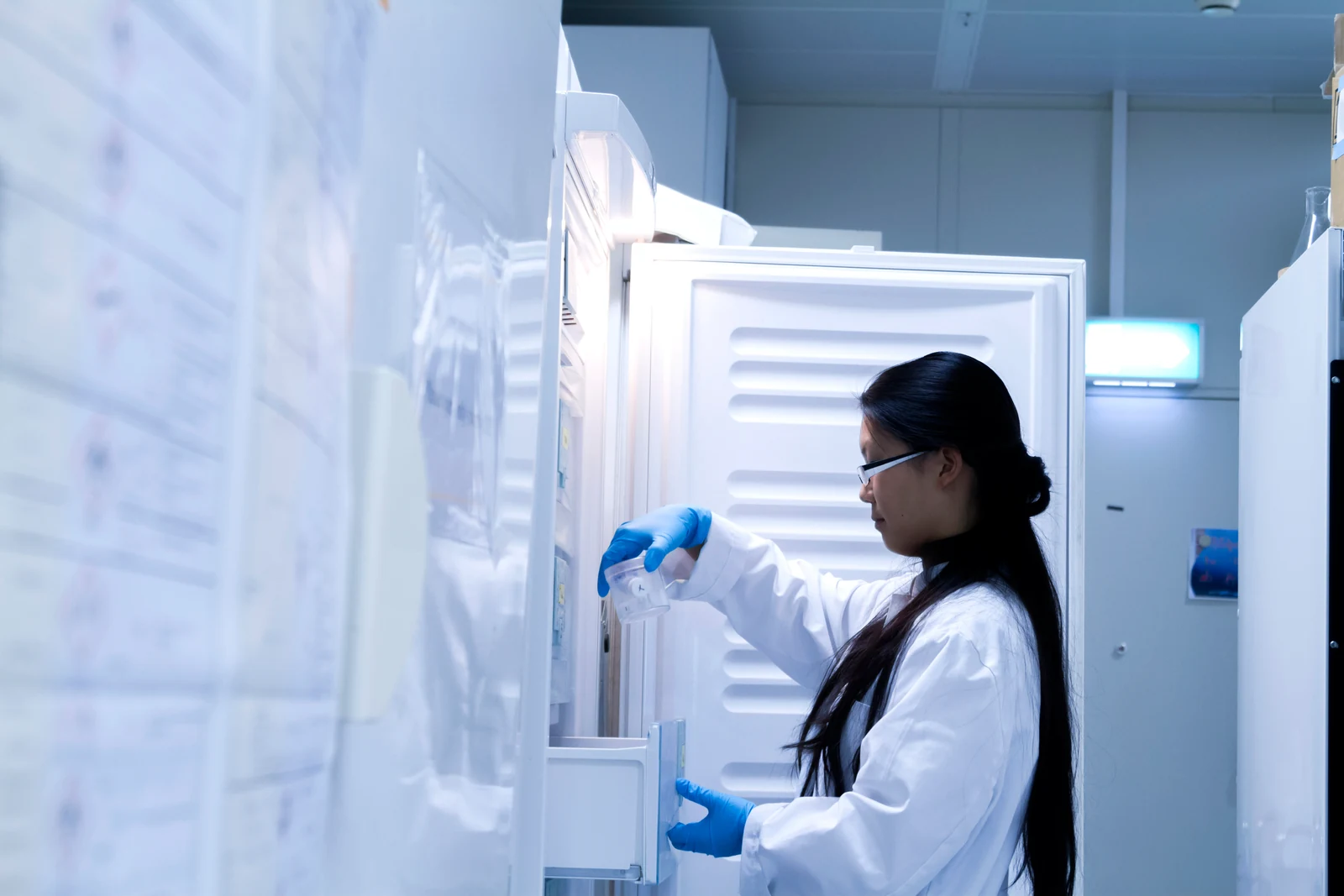
Sample handling and storage are practical requirements when defining access to shared laboratory capability. External laboratory stock photography; the pictured room is not a NEUVIOR site or a proposed campus rendering.
Image-Source · Researcher Analyzing Samples in a Lab RefrigeratorEnvato Elements commercial licence
Source and image notes
Full frame retained; EXIF orientation honoured, proportionally resized and encoded as WebP. No crop, recolouring, compositing or generative changes.
Learn through existing capability
A scoped programme using an established facility can reveal the real work involved in delivery. The team can learn about technical support, sample handling, scheduling, reporting and the questions that arise when a method meets actual material.
This stage should produce knowledge that changes the development case: the capability users need, the expertise it requires and the cost of delivering it properly. It can also show that continued external access is the stronger route. NEUVIOR’s initial ZYLON work involving the  Biorenewables Development Centre provides a bounded example of specialist laboratory access for a defined programme. A new building is one possible later response to demand.
The campus begins with the work · External research, 2026
Build the useful operation first.
Start with one operation, its handoffs and the evidence it must produce.
Excerpt: source-film 0:28–0:40. Viewing 0:28
Make the first scope precise
Which handoff needs a named owner?
Keep the questions your first programme would need to resolve.
Choose the handoffs relevant to your first programme.
Use existing capability
Specify the work, operators and retained evidence before expanding space.
Inspect the handoffs
Understand sample transfer, exceptions and review around the operation.
Earn the case for more
A dedicated hub or building needs programme evidence and a service case.
Original study, film rights and limits
Longley, L. et al. (2026), ‘RobInHood: a robotic chemist in a fume hood’, Digital Discovery, DOI 10.1039/d6dd00007j. The paper is CC BY-NC 3.0; its figures and text are not reproduced.
The separate author archive, RobInHood Raw Data and Hardware Designs, version 2, Zenodo DOI 10.5281/zenodo.19693232, explicitly includes Videos/Video1.mp4 under CC BY 4.0. The preparation, filtration and analysis excerpts use source-film ranges 28–40 s, 270–310 s and 408–432 s. They are web transcodes with the whole audio track omitted; framing, source labels and pace remain intact. Three excerpts are derivatives of one original film.
The source discloses a pre-capped vial requiring manual correction. This is external University of Liverpool research, with no institution endorsement implied. It does not establish unattended reliability, validated manufacture, a NEUVIOR installation, purchased robot, operating campus, service or customer outcome. The questions and development sequence are an editorial discussion model requiring programme-specific review.
A first hub sized to its users
The next physical step could be a modest hub within appropriately leased premises. Its size and technical scope should follow identified users and the programme the operator is able to support. An existing building still needs a careful assessment of fit-out, services, access and the cost of bringing space into use.
A hub could combine selected technical capability with flexible workspace and project rooms. The operating brief needs to identify what is included in a tenancy or service fee, what is separately charged and who supports the day-to-day work. A useful first place should make recurring demand easier to understand before the organisation takes on a larger fixed commitment.
Phased infrastructure
Which next step buys the most useful learning?
A first programme, a leased hub and a purpose-built campus are different decisions. Walk through the sequence to see what each step should produce for the next one. Progress means reducing a specific uncertainty about users, operation or economics; it does not require taking on the largest physical footprint.
Editorial decision model, not measured NEUVIOR results.
A smaller step can answer the more valuable question.
The sponsor can compare the learning from external access with the obligations of a leased place. This lens favours a commitment that remains useful on its own, has an accountable delivery route and can be stopped without relying on a larger future development.
Define the pause condition before agreeing the next stage.
Scoped external access
A bounded programme using existing capability can expose the real work around a method: handling, support, scheduling and reporting. It should answer a technical question while revealing whether repeat demand or a service gap deserves a further commitment.
- Recurring need
Defined task, access conditions and programme learning.
A useful next stepState what the programme must teach the development team.
Each physical phase should earn its place by producing evidence the following decision actually needs.
Shape the V around an operating brief
The architectural concept brings two complementary wings around a shared garden, with a lower public discovery pavilion. The research wing concentrates selected capability and technical support. The enterprise wing makes room for teams to begin, collaborate and grow.
The operational brief should determine the space within that form. Technical suites, write-up areas, circulation, deliveries, maintenance and public access need to work together. The long-term envelope does not dictate the first construction phase or a fixed division between laboratories and offices. A first phase should be designed around the people ready to use it and a service model that can sustain the place.
Scotland and the local development question
Scotland is under consideration for a first Constellation destination. Founder Varun Sharma visited AMIDS and spoke with people involved in the location’s development. That exploration helps the team ask more precise questions about the capability, space and local role a proposal would need.
Scottish Enterprise’s H1 2026 market research highlights demand for flexible laboratory and office space, including smaller requirements. The useful next task is to test the fit with specific users, available alternatives and an appropriate operator. Site choice should then consider services, access, planning, delivery and the full economics of the proposed use. A regional opportunity becomes a campus case through that detailed work.
Grow a programme that can support a network
Our long-term ambition is eight Constellation destinations by 2045. Each should contribute a distinctive capability and a clear local purpose. A network becomes useful when its places complement one another and connect people to expertise they have a reason to use.
The public Discovery Gallery forms part of that ambition, with a separate programme, operating budget and supporters. Enterprise space, scientific services and public discovery need clear responsibilities and income models. Learning from a first programme or hub should shape the next destination: which work repeats, which costs are shared and which choices depend on the local setting. Expansion should follow that knowledge.
Help define the first useful place
We welcome prospective users, technical operators, developers and people who can help deliver public discovery. The most useful contribution is a real requirement or a capability that can be matched to one: a specific scientific task, a growing team, a delivery skill or a public programme with a clear audience.
Tell us what you need, how often you would use it and what a workable arrangement would look like. We can then explore the relevant programme, specialist-access route or hub requirement. The purpose of the next discussion is to make a first step concrete enough to assess, with an operator, a scope and a result worth learning from.