
Every resource has a role. Every improvement needs a reason.
Medicine depends on more than the molecule. It depends on the energy that holds a process steady, the materials that protect a product, and the decisions that determine what is used again.
We study where better science can make those resources work harder. The aim is practical: help industry identify changes worth developing, investing in and adopting.
In the conversation.
NEUVIOR and our founder’s perspectives have appeared across science, business and technology publications.

















Reporting, commentary, letters and podcast appearances | Read each feature for its format and source.
The next medicines opportunity is also an industrial one.
A medicines manufacturer has to deliver a dependable product while managing electricity, materials, maintenance and capital. Improving one part of that system can change the demands on another. The interesting opportunity lies in finding improvements that remain useful when those realities are counted together.
Our Resource Economics work connects energy intelligence, materials research and recovery with the business case for change. It asks a more valuable question than whether something looks greener: what does it do, what does it replace, and why would an industrial user choose it?
17% of NHS England’s Carbon Footprint Plus was attributed to medicines and prescribing in its 2024/25 assessment. This category excludes direct emissions from inhalers and anaesthetic gases.
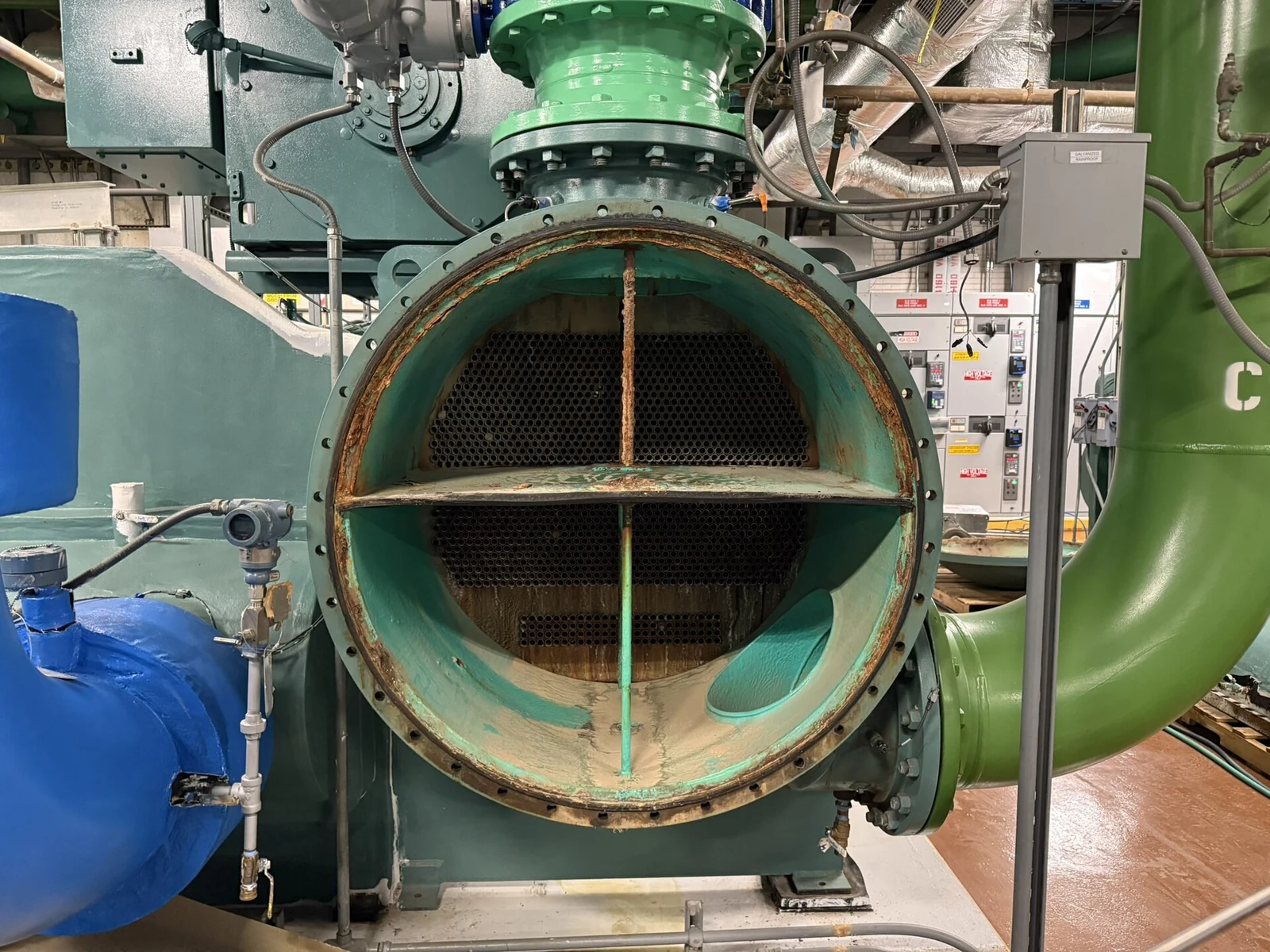
An opened chiller heat exchanger reveals the physical equipment behind a heat-transfer duty.

A steadier process. A smarter energy decision.
Chilling and freezing have a precise job: maintain the conditions the process needs as operating demand changes. PHARMORIS-ECO investigates whether predictive approaches can improve energy performance in fixed pharmaceutical manufacturing equipment.
The useful questions are concrete. When does tomorrow’s workload alter today’s operating decision? How much can ambient conditions explain? Where does a well-tuned existing control already perform strongly? Answering these questions helps identify where a more intelligent approach has a worthwhile industrial role.
A new material needs a useful place in medicine.
Bio-derived materials become commercially interesting when their properties meet a real application. Preparation, thickness, humidity, storage and handling can all change what a film can do. Those details decide whether an attractive laboratory sample can address an industrial problem.
ZYLON’s completed initial feasibility work explored bio-derived materials and selected recovery opportunities, including seaweed-derived candidates. The next development proposition is application-led: identify the function, compare with the incumbent material, and establish which further tests would make a decision clearer.
Industrial decisions
Which improvement survives the complete industrial comparison?
An engineering gain becomes investable when the product, process and business can all carry it. Select a resource route to see what would need to stay equivalent, which extra burdens might appear, and where a focused study could make the next commitment clearer.
Editorial decision model, not measured NEUVIOR results.
The useful gain has to persist through ordinary operation.
An operations team needs to know when the alternative works, what happens during an exception and whether existing controls can deliver much of the same benefit. The next study should distinguish a real operating advantage from a favourable comparison period.
Define the baseline and a credible failure condition.
Useful process duty
Begin with what the process must actually deliver: a defined material, controlled condition or product function. Comparing unlike outputs can make an apparent improvement disappear when the manufacturer attempts to use it at the required quality.
- Same useful service
- Same required function
Required product specification and operating duty.
A useful next stepDescribe one output the comparison must preserve.
A scoped resource study should connect one industrial duty with a defensible adoption decision.
Recovery matters when the next use is real.
A recovered output needs a destination, a specification and a buyer who can use it. Yield alone cannot answer that question. Purity, consistency, additional processing and the resources consumed in recovery all shape whether the loop is useful.
We want resource research to connect the recovered material with its intended function. That means examining what has to be removed, what quality has to be maintained and where the resulting output could enter an appropriate process. It also means recognising where avoiding a waste stream is more useful than recovering it afterwards.
Material journeys · External research · 2016
Recovered.
Ready for what?
Watch a material separate.
Then follow the questions that remain.
Two solar-cell samples are dipped into a dish in turn. Dark layers visibly dissolve; clearer substrates are returned beside the dish and fragments remain in the liquid. Material identities and chemical measurements come from the paper.
Published · Nature Communications 7, 11735
CC BY 4.0 · Full frame and sequence retained. Original audio removed.
Follow both routes.
The paper describes selective dissolution of the perovskite and hole-transport layers, leaving a gold electrode and a coated conducting-glass substrate. It also examines lead contamination and residual solvent (Kim et al. (2016)).
solar cellLaboratory scale
A conceptual reading of the study. Line width, colour and position do not represent mass, hazard, recovery yield or environmental impact.
Recovered material
Separation is visible.
Suitability needs evidence.
Separate analysis in the paper
0.41%
Lead impurities reported in collected gold electrodes, with reference to Supplementary Table 1 (Kim et al. (2016)).
This percentage is reported by the authors. It is not a purity measurement made from the film, a buyer’s acceptance limit or a result for your material.
What composition, condition and acceptance test would the intended user require?
Remaining solvent
The liquid stays
inside the decision.
Separate treatment experiment in the paper
2,017,791.3 67.4 p.p.b.
Reported lead concentration before and after a two-step treatment of a lead-containing DMF solution; p.p.b. is expressed as μg kg−1 in the paper (Kim et al. (2016)).
A separate experimental condition. These values are not measured in the movie and do not establish a safe discharge, a local treatment result or a complete mass balance.
Which residual streams, analyses, treatment steps and destinations belong inside your scope?
Further treatment
Count the work
after collection.
Work discussed outside the film
- Refining of collected metal
- Solvent extraction
- Ion exchange
The paper discusses further refining of collected gold and a separate residual-solution treatment using solvent extraction followed by ion exchange (Kim et al. (2016)).
The movie does not demonstrate the entire treatment chain. This is study context, not an operating procedure or a validated process for another material.
Which additional tests, inputs, operations and responsibilities would be required before the next use?
Next destination
Recovered into what?
For whom?
A boundary for your assessment
An output needs
an acceptance condition.
The authors describe a laboratory recycling route. A viewer’s intended use, recipient specification and acceptance decision are not established by this experiment.
The film establishes no local selling price, recovery yield, energy demand, carbon saving or commercial viability.
Who would accept the output, against which evidence, and what happens if it fails that specification?
From watching to a useful question
Specify the output.
Expose the gaps.
Describe a recovery question from your organisation. Build a source-linked brief for discussion. Blank fields remain unknown; the published study does not fill them for you.
Local to this page. Nothing is submitted or saved between visits. Include no patient or confidential information.
Start with a material. Everything else can remain an explicit evidence gap.
Read the source, changes and boundaries
The original research
Kim, B. J., Kim, D. H., Kwon, S. L., Park, S. Y., Li, Z., Zhu, K. and Jung, H. S. (2016) ‘Selective dissolution of halide perovskites as a step towards recycling solar cells’, Nature Communications, 7, 11735. Published 23 May 2016. doi:10.1038/ncomms11735.
Original Supplementary Movie 1 · Source record · CC BY 4.0.
© the authors 2016. The article licence includes third-party material unless a credit line states otherwise. Reuse does not imply author, institutional or publisher endorsement.
What this section does
The complete original 29.10-second sequence is retained at 854 × 480 and 29.97 frames/s. The H.264 video is copied without re-encoding into MP4, with all original audio omitted. The poster is a full-frame WebP still at approximately 26.03 seconds. No frames are generated, cropped, rearranged or colour-graded.
All video packet timestamps, durations and decoded frames are unchanged. MP4 stream-duration metadata reports the final sample end, one 1/29970-second tick longer than the original stream-duration metadata (approximately 33.37 microseconds).
Viewing points are approximate recording positions, not measured process milestones. The diagram organises questions; it is not a simulation or mass balance. Form entries are unverified notes.
What needs a separate study
This 2016 solar-cell experiment does not establish another material’s output quality, recipient acceptance, safe disposal, total resource demand, net environmental benefit or commercial return. It is not footage of a NEUVIOR installation or medicines manufacturing.
Reported lead impurities and treatment values are separate paper analyses. The film does not supply a complete treatment chain. Copyright reuse does not establish patent freedom, safety or regulatory suitability. Published context and your local notes remain separate in the exported brief.
Resource Economics | See the boundary
Where does the
improvement end?
A material can leave one ledger and enter another. Expand the view to see what a manufacturing decision still needs to account for.
What is needed to make the same accepted product?
A smaller input is only the beginning.
- Included
- Fresh materials, water, the transformation and accepted product output.
- Still unresolved
- Recovery energy, treatment, cleaning and upstream production are outside this first view.
- The decision
- Use this view to locate a material-intensive step. It cannot establish a whole-process environmental advantage.
- Evidence to bring
- Batch-linked charges, accepted output and a consistent product specification.
Boundary context: ACS (2014) and EMA (2026). Study framing is NEUVIOR’s proposed approach.
Resource Economics | The factor and its boundary
One factor.
One stated boundary.
A conversion is useful when its activity, unit and scope match the question. Inspect a real reference row, then optionally enter a matching measured quantity.
1.2 | July revised flat file | Three selected rows from the 2026 DESNZ flat file. Changing the activity clears the quantity so a different unit is not reused silently.
DESNZ | 2026 published reference
0.13096kg CO2e per kWh
Electricity generated | Electricity: UK
Source classification: Scope 2
Factors by Category | Workbook row 3066
Generation is one part of the electricity boundary.
This row converts a matching electricity quantity in kWh using the published UK electricity-generated factor.
Separate transmission, distribution and well-to-tank factors are excluded. This is not a full-grid lifecycle result or a complete purchased-electricity footprint.
Optional | A single-activity scenario
Use kWh for the defined electricity activity. A tariff, bill total or power rating in kW is not the same quantity.
Start with the activity record
The quantity is yours to establish.
No quantity entered. Choose a matching activity and unit before calculating.
What should a professional check next?
Confirm the activity period, geography and reporting boundary before selecting any additional factors. Do not describe this single-row estimate as the whole impact of an electrical process.
Keep the measurement period, source record and factor edition together. A change in the selected factor is not evidence of an operational improvement; a reduction claim would need a comparable baseline and the relevant wider boundary.
Inspect the method and source edition
Calculation: entered activity quantity × the selected published factor = kg CO2e for that activity boundary. Factors are preserved as retained in the source rows. Displayed results use up to eight significant digits; that display precision does not establish measurement accuracy.
The input starts blank. Zero is accepted as an explicit quantity; a missing value is not treated as zero. Negative, non-finite, non-numeric and unrepresentable quantities or results are rejected. No scenario input is sent or saved, and the component never adds the electricity and water rows into an organisation total.
Source: Department for Energy Security and Net Zero (2026), greenhouse-gas conversion factors, version 1.2 | July revised flat file. Worksheet: Factors by Category. Selected factor ID: 7_400_4000_5_1. Inspect the retained official workbook.
Contains public sector information licensed under the Open Government Licence v3.0. DESNZ (2026) | Publication and methodology.
Make the commercial case as carefully as the scientific one.
Manufacturing teams need to understand process performance. Quality teams need to understand the change. Finance teams need to understand the cost of adoption. A strong industrial proposition gives all three a reason to take the next step.
Our evaluation approach brings operating resources, implementation effort, maintenance and useful lifetime into the same comparison. A reduction that depends on extra treatment, downtime or replacement equipment needs to be assessed on that basis. The goal is a decision a manufacturer can defend, with the important assumptions visible.
• Manufacturing and engineering | A clearly bounded operating problem and a comparison that accounts for load, stability and equipment requirements.
• Quality and regulatory teams | A proposed change that can be examined through the organisation’s established quality and change-control processes.
• Procurement, finance and investors | An adoption case that explains the intended buyer, the cost drivers and what further evidence would change the investment decision.
Measure what matters to the decision.
We organise resource questions around a functional comparison: the same useful output, the same operating requirement and a clear account of the differences. Energy intensity, material use, process stability and the cost of a change each have a part to play.
This makes the next study more focused. Define the baseline. Identify the conditions the alternative must satisfy. Record the measurements that would support or weaken the case. A result should explain where further development is worthwhile and what an industrial partner would need to establish before adoption.
• Useful output and quality requirement
• Current operating baseline
• Energy and material demand
• Stability and failure conditions
• Implementation and operating costs
• Evidence needed for the next decision
NEUVIOR Data Analysis
A source.
A question.
A clearer decision.
Useful intelligence keeps its evidence attached.
Our public analysis connects a defined question with named sources, reporting periods and methods. Each source below shows the work available today and the access still needed.
Published-data analysis, research hypotheses and evidence studies are distinct kinds of work. Their meaning should remain clear as the programme grows.
Department for Energy Security and Net Zero | Annual, with revision notices
Greenhouse-gas conversion factors 2026
Which dated factor and accounting boundary fit a measured resource activity?
Dataset retrievedAmerican Chemical Society | Green Chemistry Institute | Method reference; inspect dated guidance
Process Mass Intensity method
Which material inputs dominate a process, including water?
Method referenceEuropean Medicines Agency | On guideline revision
Chemistry of active substances guideline
What process, recovered-material and impurity controls belong in a resource proposal?
Document retrievedResource Economics | A mass lens
One kilogram of product.
Everything behind it.
A product’s mass is only part of the picture. Explore the materials behind it, and the input that shapes the balance.
Set the boundary. Enter the masses.
One process boundary. Kilograms throughout. Enter zero for an unused input category.
Final dry product, within the same boundary
Excluding water
Include process water
Starting materials and reactants
Reagents, catalysts and other inputs
Your entries
Process mass intensity
kg input per kg product
Enter all five masses. Use zero for an unused input category.
The strips will reveal the mass proportions when every field is complete.
Solvents
Solvents used within the selected process boundary, with water entered separately.
A material-input view makes the next question clearer. Quality, hazards, energy and life-cycle impacts belong in the wider decision.
How this works and what counts
PMI = Total material input mass ÷ isolated product output mass
Use one consistent process boundary and kilograms throughout. For a pharmaceutical synthesis, the ACS definition covers the route to the final bulk API, including synthesis, isolation and purification materials and water.
- The calculator sums the four input categories exactly as entered. Use zero for a category with no input and avoid counting the same material in two categories.
- Product output is the denominator; it is not an additional input. For the ACS pharmaceutical definition, use final bulk API dried to its expected specification.
- This is a simplified single-boundary arithmetic view. It does not model convergent routes, intermediate transfers, recycle loops or recovery credits.
- The product strip shows its mass relative to entered inputs. The unfilled remainder is not identified as waste, emissions or a particular recovered stream.
- PMI describes material use. It does not by itself determine hazards, energy demand, carbon impact, costs or environmental performance.
- Inputs and calculations stay in this component's browser memory. This component has no upload, storage or external calculation service.
The method follows the ACS GCI Pharmaceutical Roundtable’s published PMI definition. This is NEUVIOR’s simplified educational interface, not an ACS certification or a validated manufacturing assessment.
- Process Mass Intensity Calculation Tool | American Chemical Society | Green Chemistry Institute
- ACS GCIPR Solvent Selection | Process Mass Intensity Metric | American Chemical Society | GCI Pharmaceutical Roundtable
- New PMI-LCA Tool Makes Connecting Chemistry to Climate Impact Easier | American Chemical Society | Green Chemistry Institute
Sources checked 2026-10-13. Values shown are rounded for reading; calculations use the numbers entered.
Build the company to match the ambition.
NEUVIOR plans to work towards B Corp certification and NHS Evergreen Sustainable Supplier Assessment Level 3. These ambitions connect the way we operate with the expectations of the people and organisations we hope to work with.
The Evergreen Level 3 target directs attention towards validated net-zero targets, emissions reporting and responsible supply-chain practice. The planned B Corp journey brings a wider view of governance, workers, communities and environmental stewardship. We will publish the milestones as the underlying work is completed.
NHS Evergreen Level 3: target | B Corp certification: planned journey
Which resource decision is holding your next improvement back?
Bring the process, the specification and the question. We can discuss whether a focused research proposition could make the next industrial decision clearer.
Sources and further reading
Questions with a destination
Find the work
that matters to you.
Start with the decision your organisation needs to make. Each reading journey explores the practical problem, the evidence worth examining and a possible focused evaluation.
18 questions to explore
The resource decision
Solvent recovery that earns its return
A solvent leaving a process can be an expense, a useful material or a difficult mixture.
The resource decision
A better solvent must improve the whole process
Changing a solvent can change far more than the label on a drum.
The resource decision
Cleaning is a process decision too
The end of a production batch is the start of another resource-intensive sequence.
The resource decision
Give each water stream a justified next use
A pharmaceutical site can contain streams with very different qualities and destinations.
Continue the programme
- ZYLON
Explore ZYLON’s completed initial feasibility record and the application-led questions behind bio-derived materials, recovery, characterisation and industrial adoption.
- PHARMORIS-ECO
Explore PHARMORIS-ECO’s research into predictive energy optimisation for fixed pharmaceutical chilling and freezing, alongside process stability and industrial adoption.