
Can the biology survive the journey?
A convincing result in one experimental system starts a new set of questions. Can the relevant exposure be achieved where it is needed? Does the effect persist in a model with different constraints? Is the next study capable of changing a development decision? NEUVIOR’s translation workstream connects these questions before a promising mechanism becomes an expensive commitment. It is an exploratory development direction, not a clinical programme or an intervention available to patients.
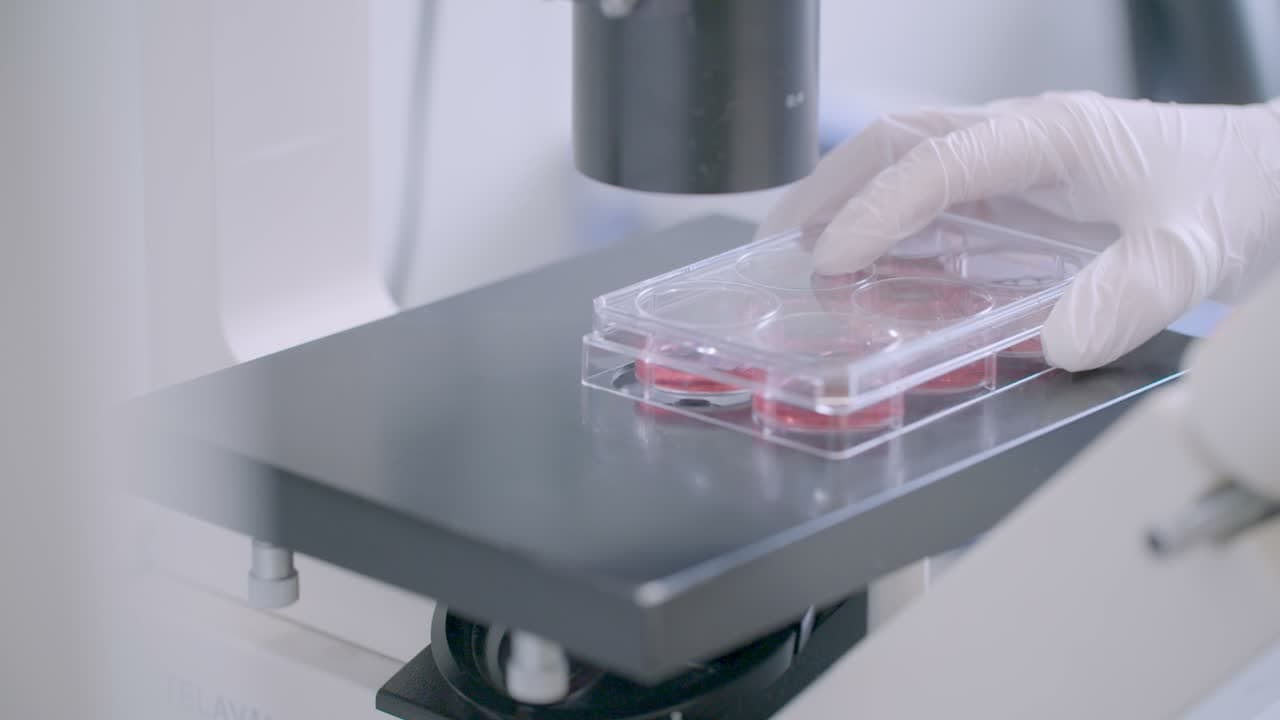
Give the proposed use a precise shape.
The starting point would be a written account of the biological question, the intended experimental setting and the decision the next study must support. A local delivery concept and a systemically administered intervention would face different exposure and practical questions. We have not selected a clinical delivery platform. A collaboration would first identify the assumptions that most strongly determine feasibility, including the relevant malignant population, its spatial distribution and the non-malignant functions that the programme must examine alongside the proposed effect.
Measure exposure where the argument depends on it.
A published phase 1 investigation by Sonabend and colleagues examined implantable ultrasound-assisted delivery of albumin-bound paclitaxel in recurrent glioblastoma and included brain drug-concentration measurements. It illustrates why delivery requires its own evidence, rather than being inferred from an in vitro response. It does not validate a NEUVIOR approach or establish suitability for GPX4-related interventions. Sonabend et al., 2023
Our proposed first output would be an exposure evidence map: which concentration, duration, compartment and analytical method are required to connect the intervention with the mechanism question. Total measured tissue concentration and biologically available exposure would be distinguished wherever the methods permit. Missing measurements would remain visible in the development argument.
Choose a model that can challenge the effect.
A model should be selected for the assumption it can test. A two-dimensional culture may be useful for an initial mechanism comparison; a more complex preparation may introduce spatial, cellular or exposure constraints that change the interpretation. The plan would specify what each system represents and omits before running it. Failure to reproduce an effect in a second system could reflect biology, exposure or measurement performance. The experiment needs enough information to separate those possibilities rather than labelling every disagreement a failed replication.
Compare the whole proposed intervention.
The next comparison would consider the active intervention, its vehicle or delivery condition and relevant controls as distinct contributors. A delivery method can have effects of its own. Formulation changes may alter exposure, stability or assay behaviour, so a familiar compound name would not be treated as proof of an equivalent experiment. A partner with formulation or analytical expertise could help identify the minimum characterisation needed to make the comparison credible. This workstream concerns feasibility; it does not imply that NEUVIOR already owns a finished formulation or manufacturable product.
Make reproducibility a development input.
For any later animal work, the ARRIVE 2.0 guidelines provide a reporting framework covering matters such as study design, sample size, exclusions, randomisation and blinding. They are not a substitute for ethical authorisation or an adequate protocol. ARRIVE 2.0
We would agree the primary decision criterion before the experiment, preserve unsuccessful runs and separate independent biological replication from repeated measurements of the same material. A repeat should test whether the conclusion travels under defined conditions, including work by another operator or partner where appropriate. The resulting uncertainty belongs in the investment decision.
Stage the investment around the fragile assumption.
A first development collaboration need not fund every possible assay. It should identify the assumption most likely to invalidate the next commitment and design a bounded test around it. If an exposure appears impractical, the programme may need a different intervention or question. If the model cannot distinguish mechanism from general injury, additional efficacy experiments would be premature. A decision report would state what would justify refinement, progression or stopping, with the evidence required for each route and the cost of resolving the remaining uncertainty.
A development package someone else can interrogate.
The proposed collaborative output is a feasibility brief linking the intended experimental use, model rationale, exposure measurements, mechanism evidence and unresolved risks. Analytical pharmacology, formulation, glioma-model and translational research partners could each contribute a defined part. The package should allow an independent reviewer to challenge the reasoning and identify the next evidence requirement. It would also set out material access, rights, responsibilities and publication arrangements. Its commercial value is a better justified next decision; a polished narrative alone would not establish a therapeutic asset or a route to clinical benefit.















