Shape the place around the work it needs to make possible.
A science campus should earn its place through the work it enables. Space matters, but so do access to equipment, specialist people, dependable services and the ability to move a project into its next stage. A striking building cannot answer those questions on its own.
Constellation is NEUVIOR’s proposed campus concept: a connected environment for science, enterprise and public discovery, expressed through the Vertex V form. Location remains under consideration. The collaboration opportunity is to help turn that ambition into a proposition grounded in demand, operating requirements and a workable development model.
For potential occupiers: describe what ordinary space cannot solve.
An early-stage team may need a smaller laboratory, flexible growth or access to capabilities it cannot justify owning. An established organisation may need a specialised environment or a place where scientific and operational work can sit closer together. Those are different requirements and should produce different choices in the plan.
Useful input includes the type of work, essential services, indicative space needs and the conditions under which a move would be worth considering. A discussion does not require a tenancy commitment. Its value is in identifying the requirements that a credible campus proposal would have to satisfy before a future occupier could assess it.
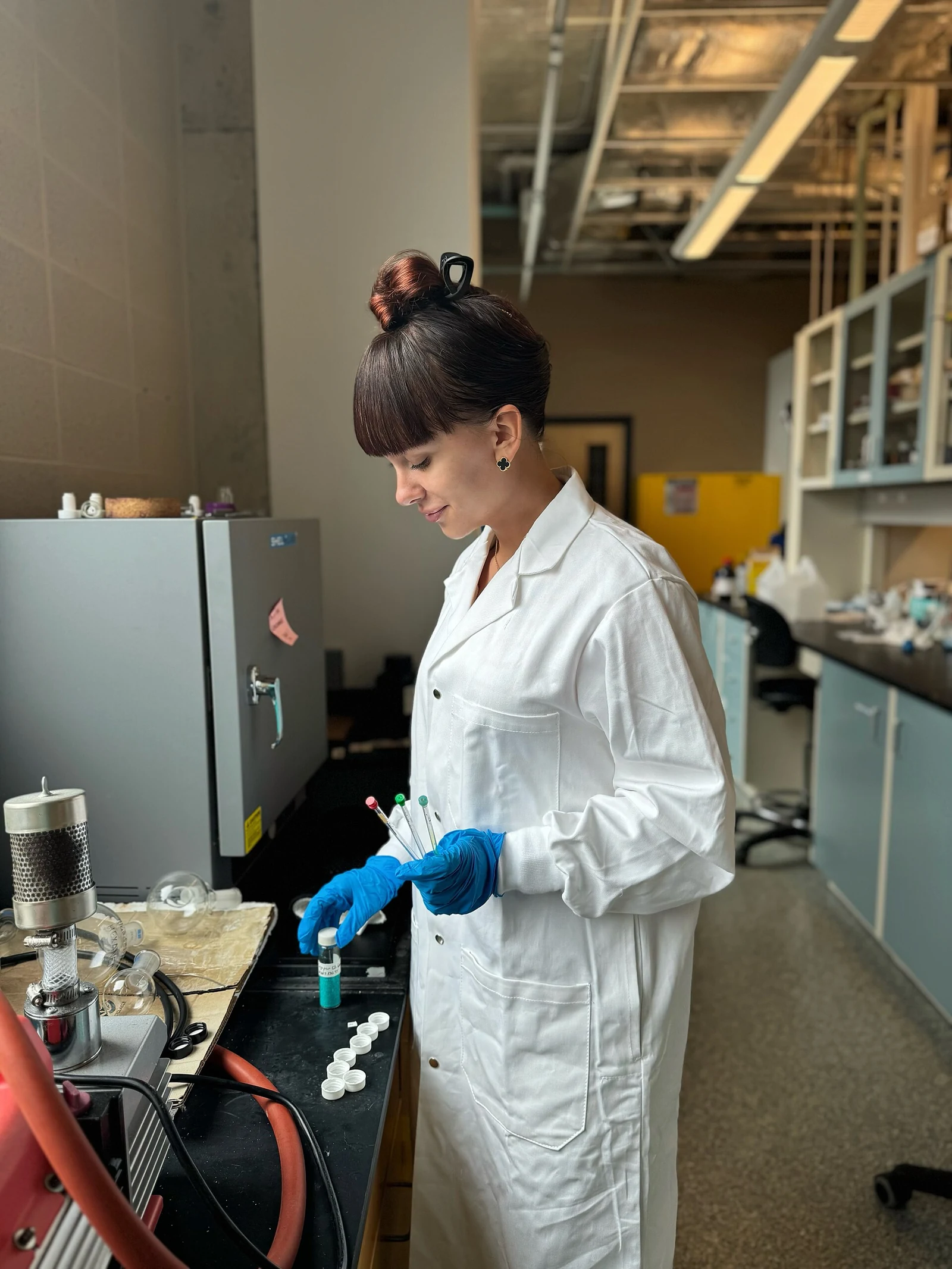
Preparation of photochemical materials at Ontario Tech University, photographed in 2024. External laboratory context; the researcher, samples and facility are not identified as NEUVIOR assets.
For universities: connect a research opportunity with a route to use.
Universities and research groups can bring methods, models, specialist knowledge and an understanding of what a project needs to progress. The question is how those contributions could interact with enterprise, facilities and development expertise in a future campus environment. A programme should have a reason to be co-located or connected.
A useful proposal states the scientific question, the contribution each organisation could make and the rights needed to carry out the work. The Intellectual Property Office’s Lambert toolkit provides a starting point for discussing collaboration principles. Agreements and publication arrangements would need to fit the actual project rather than being assumed from an exploratory conversation.
Build the proposition together
Which contribution could make the next phase credible?
Different participants can solve different parts of a proposed campus. Explore how user requirements, a research contribution, dependable operation and deliverable space connect. This is a way to prepare a useful first conversation: bring a specific need or capability, then identify the evidence and agreements that would make a bounded next study worthwhile.
Editorial decision model, not measured NEUVIOR results.
Connect a real task with a contribution somebody can deliver.
A strong first conversation defines the user’s problem, the proposed contribution and what a small study would produce. That gives researchers and operators a concrete role while leaving rights, confidentiality and delivery conditions to be agreed for the actual work.
Bring a question, relevant contribution and a proposed study output.
User requirement
A prospective occupier can explain which work ordinary space or current access cannot support. Frequency, quality, privacy and timing make the requirement useful. An early discussion can clarify those needs without treating interest as a tenancy commitment or demand forecast.
- Frame useful science
- Define the service
Task, current constraint and conditions for a workable alternative.
A useful next stepDescribe the service gap rather than requesting a particular building.
The most useful contribution closes a specific programme or delivery gap and leaves a reviewable next step.
For developers: turn the operating brief into a deliverable place.
Laboratory demand is not a generic office requirement. Utilities, servicing, access, resilience, fit-out and future changes can affect the suitability of a site and the cost of delivering it. The first development task is to understand the operating brief and how a phased proposal could respond to credible demand.
JLL’s occupier guide, developed with the BioIndustry Association, describes laboratory-space choices and leasing considerations. It is useful context for the questions a campus must answer, rather than evidence of demand for Constellation itself. Developer discussions should identify which assumptions need testing before the concept can become a site-specific development proposition.
For public-discovery partners: give the wider community a reason to enter.
Constellation’s proposed museum and public spaces should offer more than a reception display. The ambition is to help people encounter how medicine is made, how evidence changes and why scientific work involves difficult choices. Schools, educators, curators and access specialists can help define what makes that experience useful.
The public programme needs its own operating logic: who visits, what they can understand or do and how activity fits alongside working laboratories. A visitor experience should enrich the campus without confusing public areas with controlled scientific spaces. This is a design and programme-development opportunity, with practical access and operating requirements to establish.
An external perspective
A collaboration needs a reason.
UKRI uses the CINUK programme to discuss international research collaboration. Its Arctic context offers a useful prompt: which knowledge and community perspectives does a project actually need?
Watch with these questions in mind
- Look for a shared question that explains why the collaboration exists.
- Consider whose knowledge and participation should shape a project from the beginning.
CINUK: Why do we collaborate on international research?
Choosing Watch loads YouTube’s player. No player or preview is loaded before then.
Published in January 2024. CINUK concerns Arctic research and Inuit Nunangat; it is an external collaboration example, not a NEUVIOR campus or partnership announcement.
UK Research and Innovation (2024). CINUK: Why do we collaborate on international research? [Video]. YouTube. Accessed 20 October 2026.
Publisher’s programme context: UKRI’s international research and innovation explainer. Film linked by Explainer: UKRI’s support for international research and innovation.
Published by UK Research and Innovation. Included as an external educational reference; no endorsement of NEUVIOR or PHARMORIS is implied.
For capital and strategic partners: strengthen the case before scaling it.
The ambition is eight destinations by 2045, with the first credible operating model providing the basis for subsequent decisions. A future network would need a reason for each destination, an appropriate local proposition and a repeatable contribution from NEUVIOR. The ambition is not a funded construction schedule or an occupancy forecast.
A useful contribution helps test demand, define a phased scope or establish how development and operations could be financed responsibly. Tell us which part of the concept you can help clarify and what a suitable next study would produce. The immediate objective is a stronger proposition with explicit assumptions, before commitments to a location or build.